Wave modelling
Ocean waves transform through complex processes as they approach the coast. Nearshore wave conditions are therefore essential for port, coastal, offshore wind and oil and gas projects where waves are affected by the coastline and bathymetry.
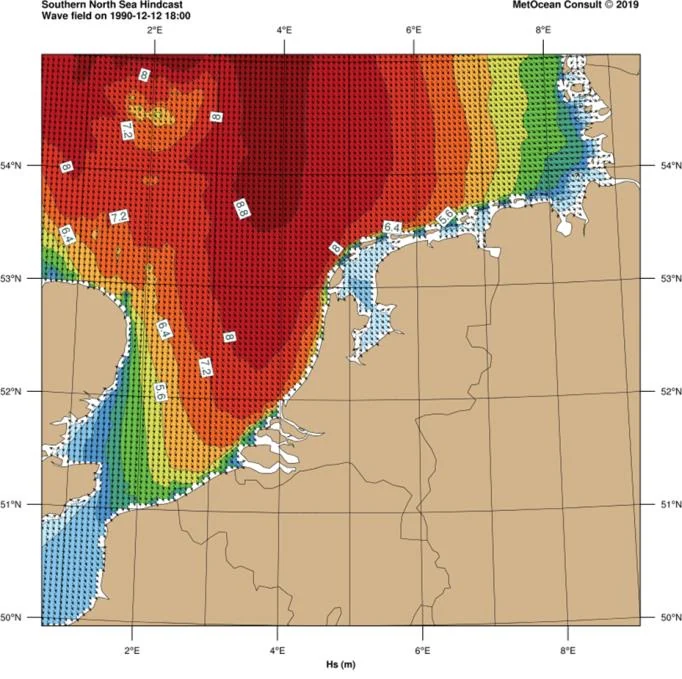
MetOcean Consult has more than 20 years of experience with wave models at all scales: from basin scale, to build hindcast databases, to port areas, for wave disturbance studies. We run wave models in stationary and non-stationary mode, on regular and flexible grids, and, where needed, coupled with flow models. We provide wave climate studies, extreme offshore and nearshore wave conditions, dedicated hindcasts and wave forecasts.
The world map on our Projects page shows where we have carried out wave modelling studies, and the domains of all our in-house wave hindcast models.
Spectral wave models
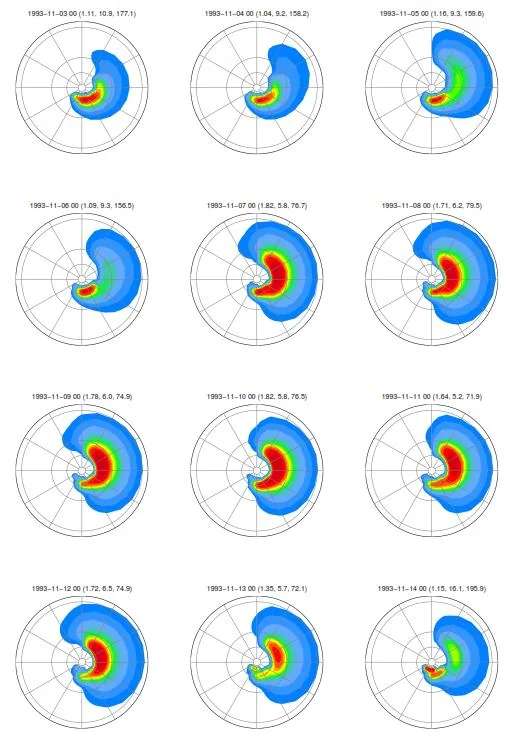
We routinely apply SWAN (Simulating WAves Nearshore), developed by Delft University of Technology, as well as MIKE 21 SW and WAVEWATCH III. SWAN accounts for:
- Wave growth by wind
- Dissipation by white-capping
- Quadruplet and triad nonlinear interactions
- Bottom friction and depth-induced breaking
- Refraction, shoaling and diffraction
- (Partial) transmission and reflection
SWAN is under continuous development and one of the most widely used wave models in the world. We keep close contact with its developers.
Nearshore wave transformation
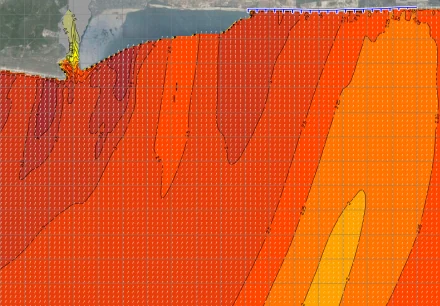
We have an extensive track record in wave transformation studies worldwide, taking into account refraction, shoaling, bottom friction, wave breaking and nonlinear interactions. Typical results:
- Nearshore wave climate
- Extreme design wave conditions
- Downtime and workability assessments
- Layout optimisation
Spectral and time-domain models
Spectral wave models such as SWAN and MIKE 21 SW are phase-averaged: they cannot be used where phase information matters. That is typically the case in ports and harbours, where diffraction and reflection can cause resonance that affects moored vessels and berth operations.
There, time-domain models are recommended: Boussinesq models such as MIKE 21 BW, or non-hydrostatic models such as SWASH. They need extensive computing resources, which are available at MetOcean Consult.
Wave disturbance in ports and harbours
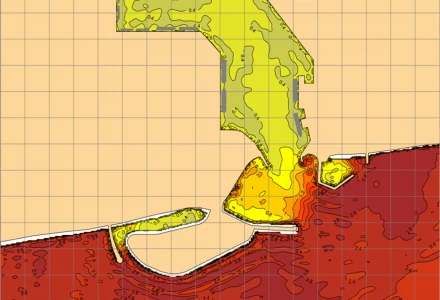
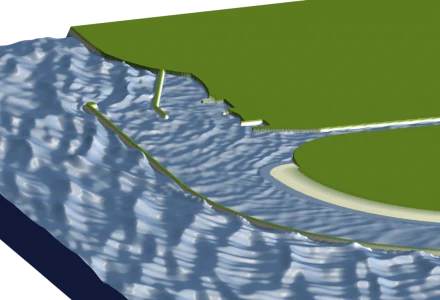
Port studies often require phase-resolving models to account for wave transmission, reflection and diffraction. We have wide experience with MIKE 21 BW and, more recently, SWASH (Simulating WAves till SHore), the open-source non-hydrostatic model from Delft University of Technology. SWASH has proven a successful alternative to Boussinesq models for wave disturbance modelling.
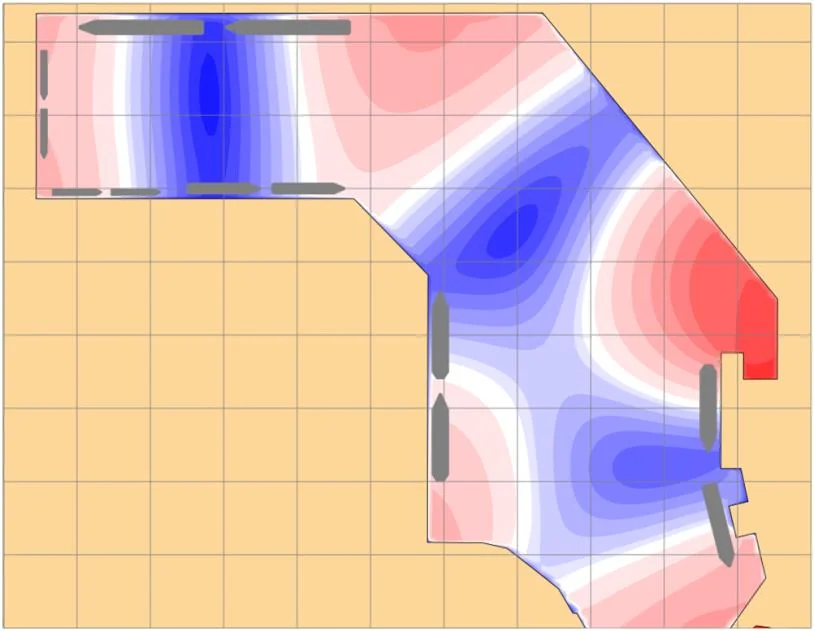
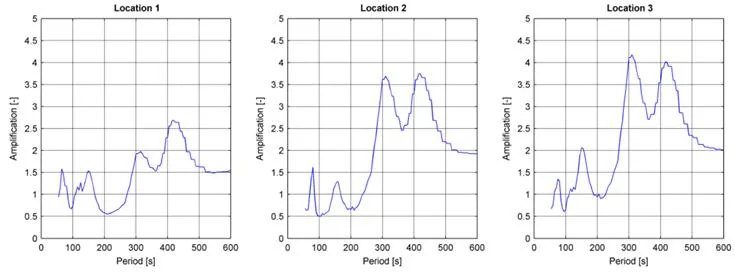
We carry out wave penetration studies of sea and swell, detailed wave amplification analyses and harbour resonance studies.
Long waves and harbour resonance
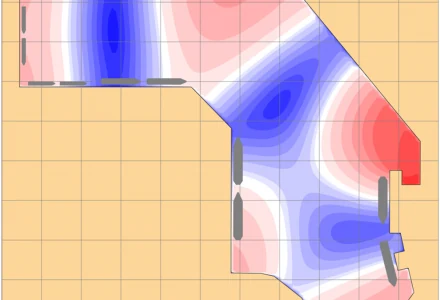
Where moored vessels may respond to long-wave frequencies, the port's response to long (infragravity) waves needs to be investigated. In a recent wave disturbance assessment, we computed the wave amplification for a wide range of incoming infragravity wave conditions, as well as the wave action of long ocean swell.
SWASH accounts for, among others, frequency dispersion, nonlinear wave-wave interactions (including surf beat), wave breaking, run-up and run-down, a moving shoreline, partial reflection and transmission, and wave-current interaction.
← All services · Questions? marco [at] metoceanconsult.com · +31 6 3310 2554